From complex chemistry to contained clinical and commercial manufacturing, we enable the safe and reliable development of high-potency APIs and Intermediates.
Our dedicated HPAPI CDMO platform supports the development and manufacturing of oncology, corticosteroids, and other high-potency molecules from laboratory scale through commercial production. With robust containment systems, dedicated infrastructure, and experienced technical teams, we help clients accelerate programs while maintaining the highest standards of operator safety, product quality, and process control.
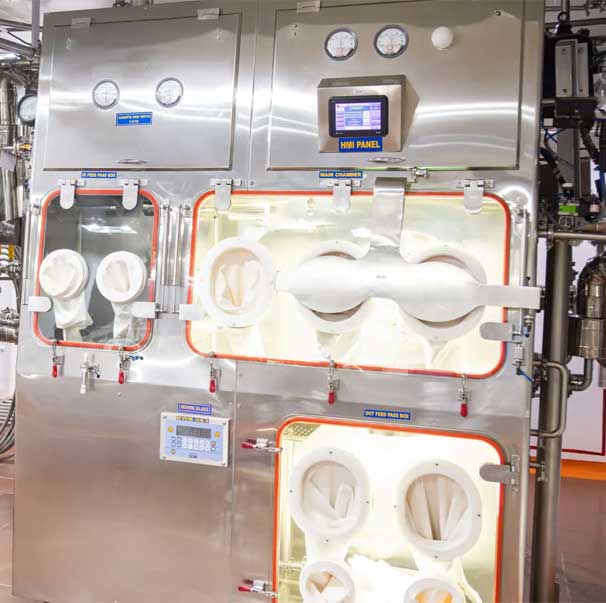
At APL, our high-potency molecule strategy is built around risk-based containment, engineered
controls, and safe product handling throughout development and manufacturing.
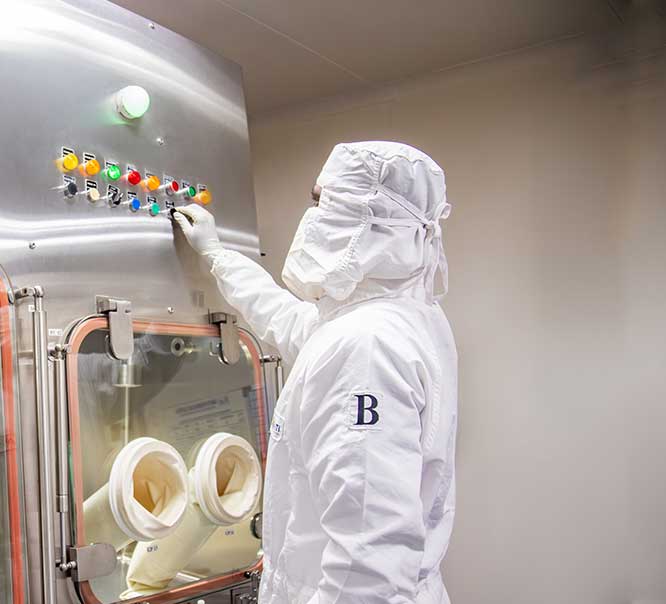
Our objective is simple: Design containment into the process from the beginning – protecting people, products, and the environment while enabling reliable scale-up and manufacturing services.
APL employs a layered containment approach to safely handle high-potency molecules, selecting the appropriate technology based on the compound hazard, OEL, process operation, and scale.
Our containment strategy is risk-based and tailored to the specific molecule and process, ensuring the right level of protection from laboratory development through manufacturing.
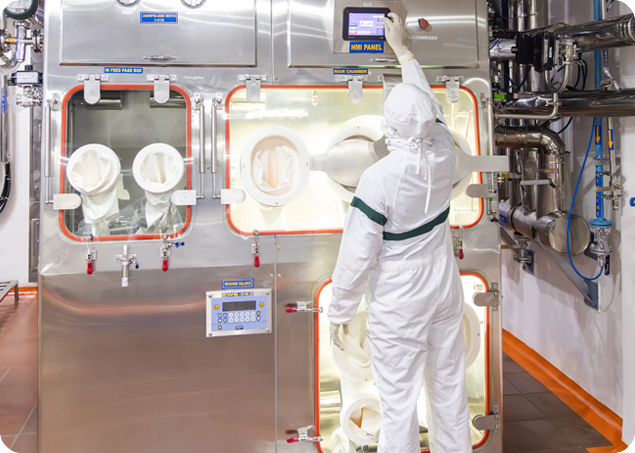
Our HPAPI facilities combine engineered containment, dedicated HVAC and HEPA-filtered air systems, controlled personnel access, and dedicated manufacturing teams to provide a robust platform for high-potency molecule development and manufacturing.
From early-stage clinical development to commercial supply, our HPAPI CDMO capabilities are built to deliver potency, safety, quality, and scalability at every stage.
| S.No | Facility / Infrastructure Considerations | Remark |
|---|---|---|
| 1 | Designated Area with Access Control | Designated Area with Restricted Access |
| 2 | Pressure Gradients | Monitoring of the air pressurization system and failure alert |
| 3 | Air Changes per hour (AC/h) | 15 – 20 AC/h typical |
| 4 | Air Recirculation and % of Fresh Air (% FA) | 100% FA (100% Once-through) or 10% fresh air with recirculation |
| 5 | HEPA filters on Outlet / Return Air | HEPA Filters available |
| 6 | Personnel Air Lock | Available |
| 7 | Separate Gowning and Degowning Areas | Available |
| 8 | Material storage area | Designated area is available |
| 9 | Maintenance and Spills | Special Attention to Maintenance Personnel Protection |
| 10 | PPE | Full Protection (PAPR / Airline Respirator, Tyvec suit, Double Gloves, etc.) |
| 11 | Waste disposal | Collect, Contain, Label and Treat (if applicable) and dispose appropriately |
| S.No | Containment Control / Engineering Matrix | Remark |
|---|---|---|
| 1 | Dispensing / Weighing – Wet Powders | Isolator with contained transfer ports |
| 2 | Dispensing / Weighing – Dry Powders | Isolator with contained transfer ports |
| 3 | Charging / Feeding - Wet Powders | Appropriate contained transfer technology, direct connection between processing units or Isolator |
| 4 | Charging / Feeding - Dry Powders | Appropriate contained transfer technology, (e.g. PTS, DCS, etc.), direct connection between processing units or Isolator |
| 5 | In-process Sampling | On-line dedicated sampling system is available |
| 6 | Filtration | AGNFD with isolator |
| 7 | Drying | AGNFD with isolator and VTD with isolator. Use of isolator for loading and unloading or change drying technology |
| 8 | Milling / Micronization / Sifting | Isolator |